
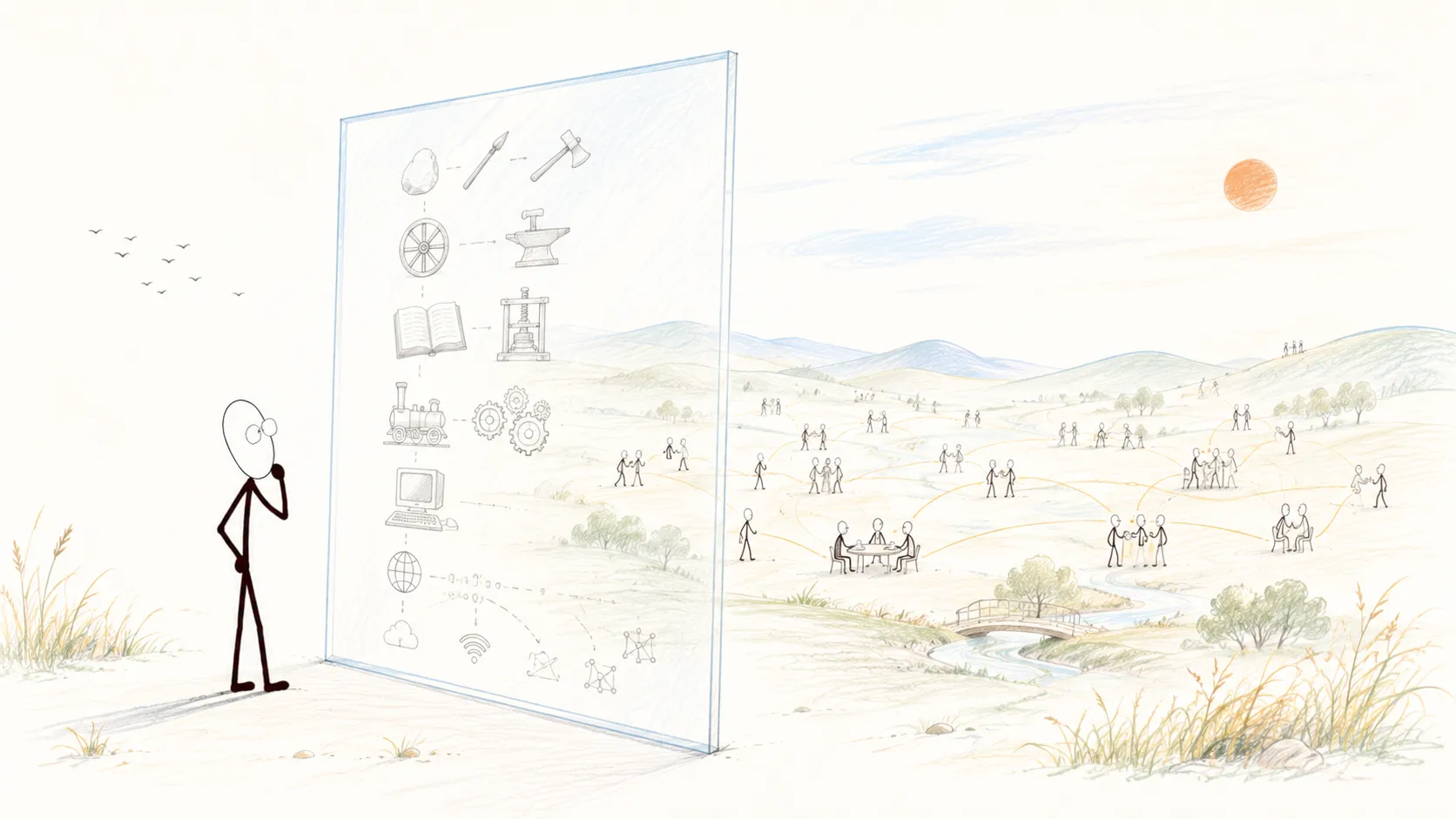
Lately, conversations about artificial intelligence (AI) seem to be everywhere. People debate the capabilities of new models, experiment with new workflows, and speculate about how this technology might reshape entire industries. Like many others, I’ve been following these developments closely, trying to weave them into my own work and learning.
Yet when I look back on these months of watching and experimenting, I realize the question that stayed with me was never really about AI.
Somewhere along the way, my attention drifted away from the technology itself and settled on something else entirely.
When a new tool enters our lives, what does it actually change?
At first, the answer seemed obvious. Better tools make work easier. They save time, reduce effort, and allow us to accomplish things that once felt difficult. That alone is significant.
But the longer I observed, the less complete that explanation became.
The same tool could lead to completely different outcomes. For some people, it simply made familiar work more efficient. For others, it became the starting point for an entirely different way of working, even opening the door to new forms of collaboration.
I initially assumed those differences came down to experience, skill, or the willingness to learn. Gradually, however, those explanations began to feel like descriptions of the outcome rather than explanations of its cause.
Another question slowly emerged.
If someone’s daily work remains essentially the same, if the way they collaborate with others has not fundamentally changed, and if their role within the larger system of society remains exactly where it was, then what has the new tool really changed?
Looking back, I realize this question did not begin with AI.
Every major technological shift seems to bring about a similar conversation. The internet did. Personal computers did. Countless tools before them did as well. Whenever something new appears, people naturally ask how it will change the world. Yet once the excitement fades, what is it that actually remains different?
At some point, I found myself paying less attention to the tools themselves.
What a tool is capable of doing is certainly important. But perhaps what deserves closer observation is how it changes the relationship between people and their tools, and how those changes gradually reshape the ways people work together. If that line of thought continues, where does it ultimately lead? To different ways of working? To a different division of labor? Or to something even more fundamental—the roles people occupy within society itself?
None of these questions appeared all at once.
They gathered slowly through reading, through practice, and through the habit of returning to ideas I thought I had already understood. I was never consciously searching for them. They simply kept reappearing, in different places and under different circumstances, until they began to resemble the same question.
So I left it there, without trying to force it into a finished thought.
Perhaps the next transformative technology will not be AI. Perhaps everything we are discussing today will one day become history. Yet some questions seem to outlive the particular moments that first bring them into view. They return whenever the world changes enough for us to notice them again.
When a new tool enters our lives, what does it really change?